Authored by Brian McGlinchey via starkrealities.substack.com
For many people, a central attraction of owning and living on a multi-acre expanse of land is the opportunity for complete privacy — to include freedom from the prying eyes of government.
While most Americans might understandably believe the Fourth Amendment’s protection against warrantless searches covers all their property, a little-known 1924 Supreme Court decision — Hester v United States — says otherwise. The case struck a major blow against privacy rights, and government agents of all stripes have been exploiting the ruling ever since.
Those exploitations have grown increasingly brazen. Just ask Josh Highlander, whose home sits on a wooded, 30-acre spread east of Richmond, Virginia.
In April, Highlander’s wife and 6-year-old son were playing basketball in their yard. When his wife went to retrieve a long rebound, she spotted a man in full camouflage walking among the trees. Alarmed, she and her son darted inside the house.
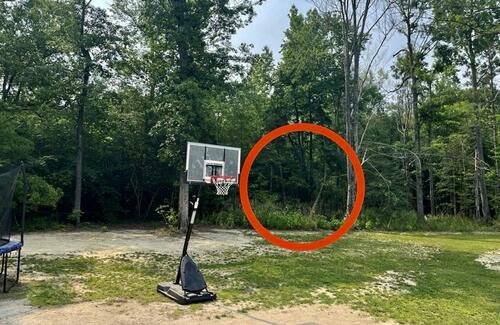
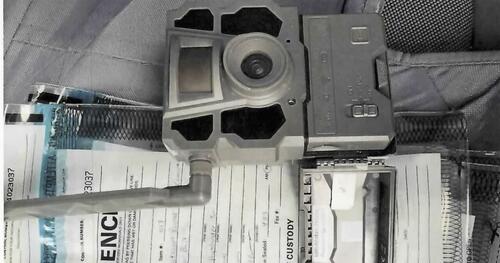
When Highlander went outside, he couldn’t locate the man, but did discover that a game camera he’d placed in his food plot was gone. When he called police, he learned the man on his property was an agent of Virginia’s Department of Wildlife Resources (DWR) — one of three who crossed another piece of private land to enter his property. Worse, the same trio had taken his camera, holding no warrant for that action either.
These incidents took place on the first day of turkey season. Before coming to Highlander’s property, DWR agents had also entered two other properties, belonging to his brother and to his father, issuing a citation to his brother for illegally hunting “over bait.” However, the alleged “bait” was seed for his brother’s own food plot, consistent with DWR’s instructions for managing such a plot.
DWR’s violation of Highlander’s liberties didn’t end that day. “For weeks, my son wouldn’t play outside in his own back yard because he was afraid of who might be in the woods,” says Highlander. “My camera was taken two months ago, and I’ve still never received a receipt, a warrant or a ticket.”
This unsettling brand of government misconduct springs from the Supreme Court’s Hester decision.
In that 1924 case arising from the alcohol prohibition, revenue agents saw a man, Hester, exit his father’s house and hand another man a bottle. When the two men became aware of the agents’ presence, they both ran, each dropping a bottle on the Hester property. With no warrant, agents entered the property, examined the bottles and found they contained moonshine whisky.
Supreme Court opinions frequently span upwards of 70 pages or more. With Hester, however, the court took just two paragraphs to decimate the Fourth Amendment’s protection of landowners, with Justice Oliver Wendell Holmes declaring “the special protection accorded by the Fourth Amendment to the people in their ‘persons, houses, papers, and effects,’ is not extended to the open fields.”
And with that, he burdened his fellow citizens with the “open fields doctrine,” which allows warrantless searches and trespassing on land beyond the “curtilage,” a vague term referring to the outdoor area immediately surrounding a home.
In 1984, the Supreme Court had an opportunity to undo the harm done by Hester, after a different kind of prohibition — against marijuana — had incentivized police to violate property and privacy rights.
In Oliver v United States, Kentucky State Police, who suspected that marijuana was being grown on private property, strolled around a locked gate and a “No Trespassing” sign and found a marijuana field a mile from the house. The court observed that the field in question was “bounded on all sides by woods, fences, and embankments, [which] cannot be seen from any point of public access.”
Despite that fact, rather than overturning Hester, the court reaffirmed the open fields doctrine in a 6-3 decision, declaring that, “because open fields are accessible to the public and the police in ways that a home, office, or commercial structure would not be, and because fences or ‘No Trespassing’ signs do not effectively bar the public from viewing open fields, the asserted expectation of privacy in open fields is not one that society recognizes as reasonable.”
Note the casual recklessness of that reasoning. The Supreme Court essentially declared that, since some private land is viewable from beyond its boundary — from a road or maybe a plane or hot air balloon — all private land apart from the “curtilage” surrounding a home is fair game for government trespasses and searches.
As technology advances, the open fields doctrine only grows more troubling: If Hester licenses government agents to wander your property at will, it follows that they can use drones or plant cameras to accomplish the same type of spying — with far greater ease and less manpower.
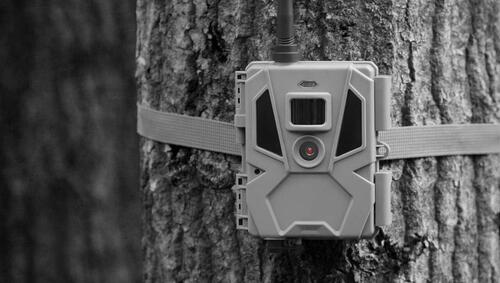
Indeed, while Virginia’s warrantless DWR agents shockingly seized Highlander’s camera so they could retroactively monitor his actions (an act that even the expansive open fields doctrine doesn’t seem to authorize), elsewhere in Virginia and in the United States, government agents are already known to hide their own surveillance cameras on private land.
The Institute for Justice (IJ) — a national civil liberties law firm that provides free-of-charge representation to victims of government overreach — has filed a suit against the Virginia DWR on Highlander’s behalf, as part of a broader, multi-state campaign against abuses perpetrated under the open-fields doctrine.
Given the formidable federal obstacles presented by the Hester and Oliver precedents, IJ’s strategy in these cases centers on protections outlined in state constitutions rather than the US Constitution.
“The US Supreme Court’s basis for the open fields doctrine has been that the Fourth Amendment lists ‘persons, houses, papers and effects,’ and none of those things are obviously the same as land,” says IJ attorney Joshua Windham in his firm’s video profile of the case.
“State constitutions often have different texts…in Pennsylvania and Tennessee, the word ‘effects’ is replaced with the word ‘possessions,’ and we say that includes private land…In Virginia, there’s a textual provision that mentions ‘places’, and of course [Highlander’s] property is a place,” says Windham, who’s representing Highlander.
In their suit filed in a county circuit court, IJ and Highlander are seeking a declaration that the warrantless search of Highlander’s property and seizure of his camera and its contents violated the Virginia constitution.
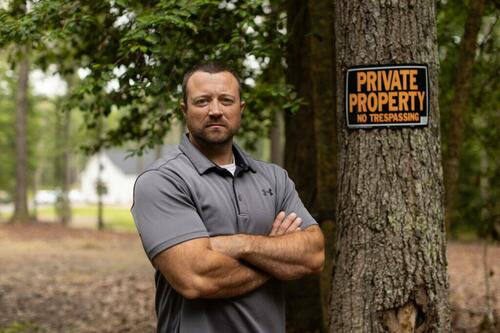
“No person at all in this country should have limitless power, and it sure seems like they do,” says Highlander. “It just makes you feel vulnerable, it makes you feel anxious, it makes you feel like someone’s watching you on your own private property.”
Thomas Jefferson and James Madison would be likewise aghast at the government conduct unleashed by the Supreme Court’s Hester and Oliver decisions. After all, colonists’ anger over British “Writs of Assistance” — which the Tenth Amendment Center’s Mike Maharrey describes as “a go-anywhere and do-anything permission slip for government agents” — was one major grievance that animated the American revolution.
While the federal precedents stand firm — for now — Highlander says he’s determined to ensure his fellow Virginians are spared the same abuse he’s suffered: “What happened to my family was wrong and I’m fighting for our privacy and to make sure this doesn’t happen to anyone else.”
Stark Realities undermines official narratives, demolishes conventional wisdom and exposes fundamental myths across the political spectrum. Read more and subscribe at starkrealities.substack.com
Loading…
https://www.zerohedge.com/political/government-agents-routinely-entering-private-land-without-warrants