NASA’s Hubble Space Telescope, the James Webb Space Telescope, the Chandra X-ray Observatory, and the European Space Agency’s Euclid space telescope are leveraging their unique capabilities to observe the universe in multiple wavelengths. Together, they provide insights into phenomena like the oldest black hole and illuminated galaxy clusters, CNN reported Saturday.
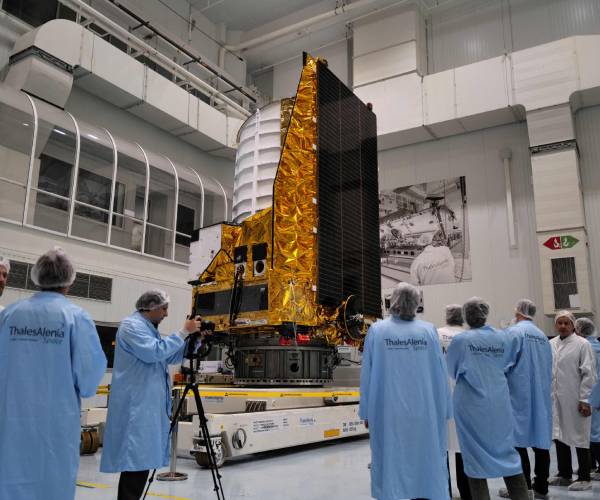
In July, the Euclid space telescope was launched with the purpose of creating a comprehensive 3D map as well as revealing the hidden “dark side” of the universe. On Tuesday, the first images from the telescope were released. Despite being invisible, dark matter and dark energy are believed to play significant roles in the structure and expansion of the cosmos.
Adding to this breadth of exploration, Euclid’s panoramic image of the Horsehead Nebula offers a glimpse into the processes of planetary formation within the Orion constellation. Such detailed observations are vital for astronomers to piece together the life cycle of stars and the potential for new planet creation. The cumulative efforts of various telescopes and spacecraft are enhancing scientists’ grasp of the vast and mysterious universe.
Nick Koutsobinas | editorial.koutsobinas@newsmax.com
Nick Koutsobinas, a Newsmax writer, has years of news reporting experience. A graduate from Missouri State University’s philosophy program, he focuses on exposing corruption and censorship.
© 2023 Newsmax. All rights reserved.
https://www.newsmax.com/newsfront/nasa-space-images/2023/11/11/id/1141943